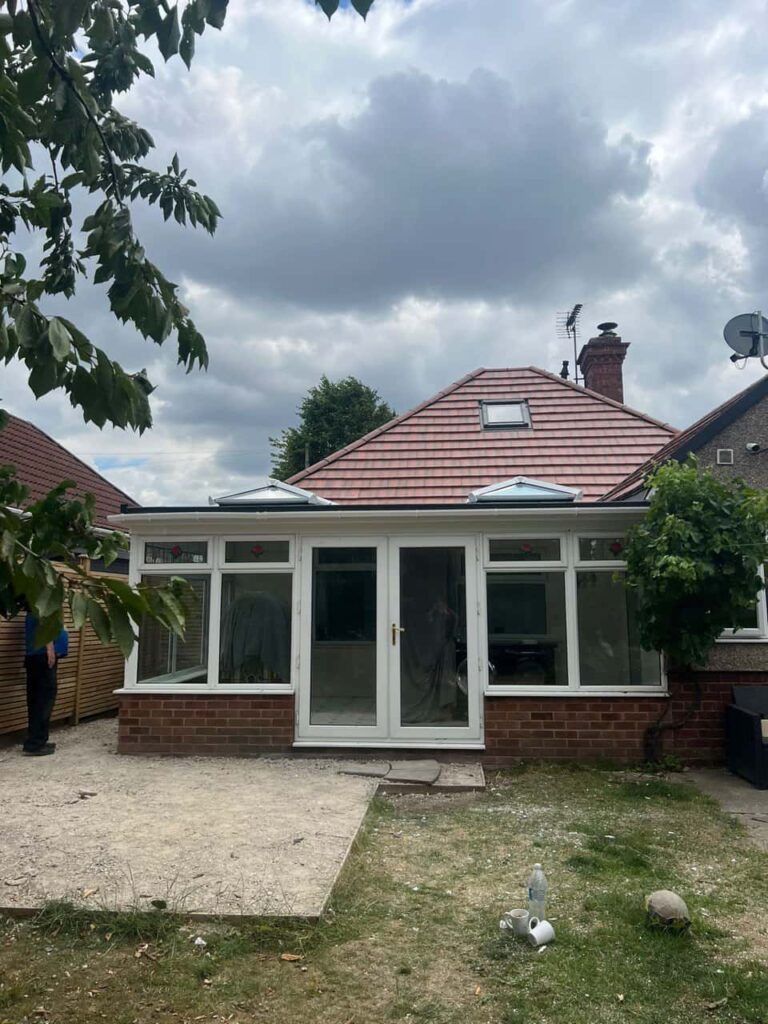
Some roofing problems can be monitored and dealt with through planned maintenance, but others require much faster attention. A suddenly missing section of roof covering, significant storm damage, active water ingress or loose roofing materials can leave parts of a property exposed when they would normally be protected.
For property owners in Calverton, Nottingham, delaying an emergency roof repair can allow a relatively concentrated problem to affect additional roofing components. Prompt professional attention is valuable because the objective is not simply to stop an immediate leak; it is also to limit further deterioration and restore effective protection as quickly as practical.
What Counts as an Emergency Roofing Problem?
Not every roofing defect is an emergency. A minor issue that is not allowing water into the property may still require repair, but it may not demand the same response as sudden or significant damage.
Situations requiring urgent professional assessment can include:
- Significant water entering the property
- Missing or badly displaced tiles
- Storm-damaged roof sections
- Loose roofing materials
- Damage that has exposed materials beneath the roof covering
- Sudden deterioration around vulnerable roof details
- Sections that appear unstable following severe weather
The severity of the problem depends on the individual roof, which is why professional assessment is important.
A Damaged Roof Can Lose Its First Line of Protection
Tiles, slates and other roofing materials form the external covering designed to protect the structure underneath.
When these materials become displaced, broken or missing, the layers beneath may experience greater exposure to rainfall and wind.
The longer that opening remains, the more opportunities there are for weather to affect components that were not intended to remain directly exposed.
Prompt repair helps restore this first line of protection before deterioration progresses.
Water Can Travel Further Than You Expect
One of the biggest problems with roof leaks is that water does not necessarily remain directly beneath the original defect.
Once moisture gets below the roof covering, it can travel along underlay, roof timbers and other surfaces before becoming visible inside the property.
This means a small external opening can sometimes produce internal signs some distance away.
It also explains why identifying the source of a roof leak requires more than simply looking at the ceiling directly above a damp patch.
Repeated Rainfall Can Increase the Affected Area
A single period of rainfall may reveal that the roof has a problem. Continued exposure can make that problem more significant.
If the original defect remains open, every subsequent spell of rain provides another opportunity for moisture to enter.
Materials that initially received limited exposure can gradually become wetter, potentially extending the area that needs attention.
Repairing the original defect promptly can therefore help prevent repeated exposure from turning a localised roofing problem into a broader one.
Roofing Underlay Can Become More Important After Damage
Beneath many roof coverings is an additional protective layer that can help manage moisture reaching below the tiles or slates.
However, this should not be treated as a substitute for repairing the external covering.
The roof is designed to function as a complete system. If the primary covering is damaged, relying indefinitely on the materials underneath places unnecessary demands on components that are normally protected.
Restoring the external roof covering remains important even when an immediate internal leak is not obvious.
Battens and Supporting Components May Become Exposed
Roof tiles and slates depend on supporting components beneath them.
If an emergency defect allows persistent moisture to reach these areas, the problem is no longer limited to the visible covering.
This is one reason early intervention can make such a difference. Addressing a missing tile or damaged section before prolonged exposure occurs can help protect the materials supporting the roof above.
A professional inspection can determine whether the problem remains superficial or whether additional components require attention.
Roof Timbers Can Be Affected by Continued Water Ingress
Roof timbers form an important part of the structure and are normally protected from direct weather exposure.
A continuing leak can allow moisture to reach these areas.
The significance will depend on the extent and duration of the problem, but allowing water ingress to continue unnecessarily increases the possibility that a straightforward external repair will develop into something more involved.
Emergency roofing work aims to interrupt that process as early as possible.
Insulation Can Become Wet
Where water progresses further into the roof space, insulation may also be affected.
Wet insulation can be difficult to identify from the occupied rooms below, particularly when the first visible sign of a leak is relatively small.
This is another reason why waiting for extensive internal staining is not a reliable way to judge the seriousness of an external roof defect.
Professional inspection can help establish how far moisture has travelled and which areas require attention.
Interior Damage May Be a Late Sign
Homeowners often become aware of roof problems after noticing a mark on a ceiling or wall.
By this stage, water has already travelled from the external covering into the building.
Internal warning signs can include:
- Damp patches
- Discolouration
- Water marks
- Dripping during rainfall
- Moisture within the roof space
The absence of these signs does not necessarily mean an externally damaged roof can be left unattended.
If obvious damage is visible outside, dealing with it before internal symptoms appear is preferable.
Wind Can Make Loose Roofing Materials Worse
Storm damage can continue developing even after the initial weather event.
A tile that has become partially displaced may be more vulnerable during the next period of strong wind. Nearby materials may also have been loosened without becoming immediately obvious from ground level.
Further movement can potentially expose a larger section of the roof.
Following significant weather damage, checking the surrounding area as well as the most obvious defect helps establish the true extent of the problem.
Emergency Repairs Should Address the Cause
Stopping water temporarily can be important, but an effective roofing repair should also establish why the failure occurred.
For example, a missing tile could be associated with:
- A damaged tile
- Deteriorated fixings
- Supporting batten problems
- Wind-related movement
- Wider deterioration within the roof section
Simply replacing the visible component without considering the underlying cause may leave the area vulnerable to another failure.
Professional diagnosis helps ensure the repair addresses the actual problem.
Delays Can Turn One Defect Into Several
Roofing components work together.
When one part fails, neighbouring materials can sometimes become more exposed or vulnerable. A missing tile can expose underlay; moisture can then reach supporting components; further movement may affect adjoining tiles.
This is how an initially concentrated defect can gradually become a larger roofing issue.
Early repairs are valuable because they can interrupt this chain before additional components require attention.
Temporary Measures Are Not the Same as a Permanent Repair
In some emergency situations, immediate conditions may mean that making the area safe and protected is the first priority.
A temporary measure can be useful where a complete repair cannot appropriately be undertaken immediately. However, temporary protection should not be mistaken for resolving the underlying roofing defect.
The affected area still needs to be properly assessed and repaired.
The objective should ultimately be to restore the roof to a secure and weather-resistant condition.
Do Not Attempt Emergency Roof Repairs Yourself
Discovering active water ingress can create an understandable desire to deal with the problem immediately, but climbing onto a damaged roof is not an appropriate DIY response.
Wet roofing materials, loose tiles and storm-damaged areas can make roof access particularly hazardous.
There is also a risk of causing further damage by walking across vulnerable sections.
Homeowners can move belongings away from an internal leak where it is safe to do so, but inspection and external repair should be carried out by experienced roofing professionals with appropriate access and equipment.
When Should You Arrange Professional Attention?
If a roofing problem is allowing water into the property, has exposed the roof beneath the covering or involves loose and unstable materials, it deserves prompt professional attention.
You should also arrange an assessment if significant damage appears after poor weather, even when an internal leak has not yet become obvious.
Early assessment can establish:
- Where the damage has occurred.
- What caused the failure.
- Whether surrounding materials have been affected.
- Whether water has penetrated beneath the covering.
- What is required to restore reliable protection.
This provides a much clearer picture than waiting to see whether the problem becomes worse.
Can an Emergency Roof Problem Still Be Repaired?
In many situations, yes.
Urgent damage does not automatically mean the entire roof requires replacement. If the problem is localised and the surrounding roofing system remains serviceable, targeted repairs may be sufficient.
The situation is different if an inspection reveals widespread deterioration or extensive damage across the roof.
The appropriate solution should therefore be based on the actual condition of the roofing system rather than assumptions made from the severity of one visible symptom.
Professional Emergency Roof Repairs in Calverton
At Calverton Roofing Repairs, we provide professional roofing, roof repair and new roof services throughout Calverton, Nottingham.
When urgent roofing problems occur, careful assessment is important for determining both the immediate defect and whether surrounding components have also been affected. Our focus is on identifying the source of the problem and establishing the appropriate work required to restore dependable protection.
If you have noticed storm damage, displaced roofing materials or active water ingress, obtaining professional attention promptly can help prevent unnecessary deterioration while the problem is still as contained as possible.
Conclusion
Delaying an emergency roof repair can make the problem worse because damaged roofing materials may leave previously protected components exposed to rainfall and wind. Continued water ingress can move beyond the original defect, affecting underlay, supporting materials, roof timbers, insulation and eventually interior finishes.
Prompt attention does not mean assuming extensive work is required. In many cases, a localised defect can still be repaired effectively when it is identified early and the surrounding roof remains sound. The important point is to establish the cause and extent of the damage before continued exposure allows it to spread.
For property owners in Calverton, Nottingham, Calverton Roofing Repairs provides professional assistance for urgent roofing problems as well as general roof repairs and new roofs. If your roof has suffered sudden damage or is allowing water into the property, contact our team to arrange an assessment and determine the appropriate repair.
Call us on: 0115 647 1193
Click here to find out more about Calverton Roofing Repairs
Click here to complete our contact form and see how we can help with your roofing needs.