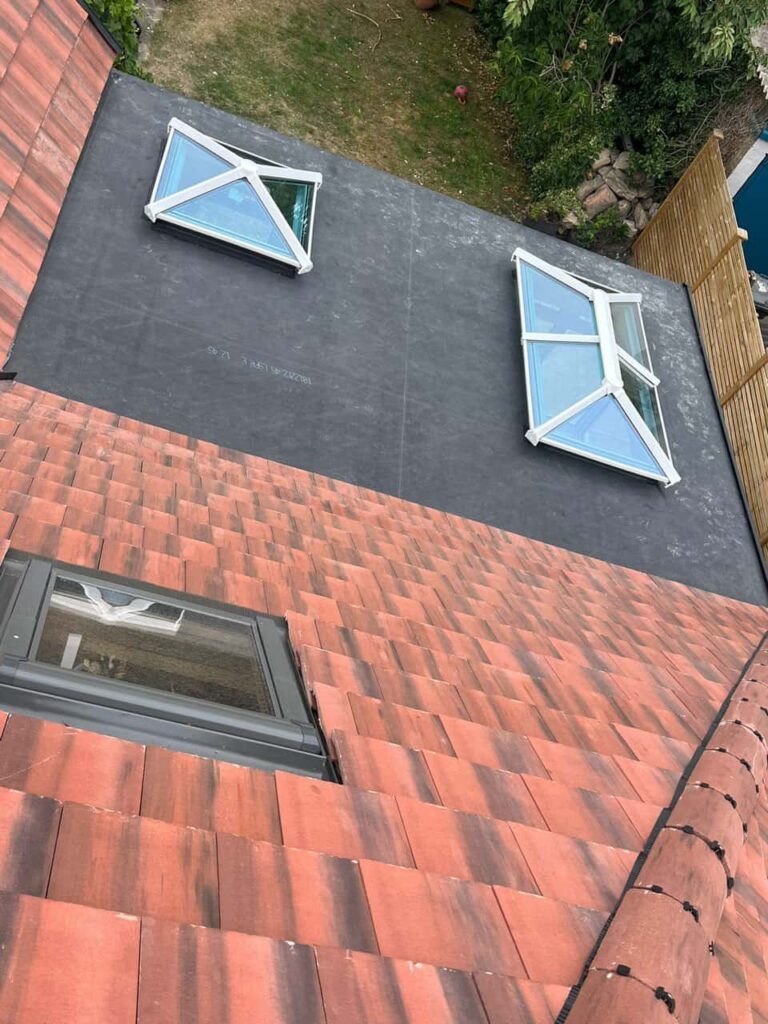
Flat felt roofs provide reliable weather protection when they are correctly installed and maintained. However, their exposed position means they must withstand rainfall, sunlight, temperature changes and occasional physical pressure throughout the year.
Cracks, splits and weak areas usually develop through a combination of ageing, movement, trapped moisture or problems within the supporting structure. Understanding the cause is important because repairing the visible surface alone may not resolve a defect originating beneath the felt.
What Causes Damage to a Flat Felt Roof?
A felt roof consists of more than its visible waterproof covering. The felt works with the roof deck, insulation, upstands, edge details and drainage system to direct water away from the structure.
Common causes of deterioration include:
- Natural ageing of the felt
- Expansion and contraction
- Movement in the roof deck
- Standing water
- Poorly formed joints
- Trapped moisture
- Physical damage
- Weak edge and upstand details
- Previous repairs beginning to fail
- Vegetation or debris obstructing drainage
A professional inspection can determine whether the damage is localised or reflects a wider problem with the roof system.
Ageing Can Make Felt Less Flexible
Roofing felt needs enough flexibility to accommodate small amounts of movement. As it ages, repeated exposure to weather and sunlight can gradually reduce this flexibility.
The surface may become dry, brittle or less able to adjust when temperatures change. Fine cracks can then develop and eventually widen into splits.
Age alone does not automatically mean that the whole roof needs replacing. The decision depends on the extent of the deterioration, the condition of the surrounding felt and whether the underlying deck remains sound.
Temperature Changes Create Repeated Movement
Flat roofs heat up in direct sunlight and cool when temperatures fall. These changes cause the felt and supporting materials to expand and contract.
A correctly installed covering is designed to tolerate normal thermal movement. Problems can develop when the material has become brittle, is tightly restrained or has not been properly bonded.
Repeated movement often affects joints, corners and places where the covering meets walls or roof penetrations. These details may experience greater stress than open sections of the roof.
Movement in the Roof Deck Can Split the Covering
The deck beneath the felt provides a stable surface for the waterproof layer. If sections of the deck move, flex or become uneven, stress can transfer directly into the covering above.
Deck movement may result from:
- Weak or deteriorated boards
- Inadequate support
- Moisture affecting the deck
- Changes in the supporting structure
- Poorly positioned joints
- Repeated pressure on the roof
A surface crack that repeatedly returns in the same place may indicate movement below. Until the underlying cause is corrected, another patch may only provide temporary improvement.
Standing Water Can Weaken Vulnerable Areas
Flat roofs are formed with slight falls to guide rainwater towards an outlet or gutter. If these falls are inadequate or the roof begins to sag, water may remain on the surface.
Standing water increases the time that joints and weak areas remain exposed to moisture. It can also collect around blisters, laps and depressions, where small defects are more likely to admit water.
Occasional water shortly after rainfall is not necessarily unusual, but persistent ponding should be investigated. Clearing an outlet may help where debris is responsible, while structural dips require a different solution.
Poor Joints and Laps Can Begin to Separate
Felt roofing is commonly installed in layers, with adjoining sections overlapped and bonded. These joints must remain secure to prevent water from reaching beneath the covering.
If a lap was inadequately bonded or has deteriorated through age and movement, its edge may begin to lift. Wind and water can then work beneath it, gradually enlarging the opening.
Joints around corners, upstands and roof penetrations deserve particular attention because they require careful detailing and often experience additional movement.
Trapped Moisture Can Cause Blisters
Moisture trapped beneath the felt can expand when the roof warms, pushing the surface upwards and creating a blister. The raised area may then stretch, crack or split under continued pressure.
A blister does not always leak immediately. However, it creates a vulnerable section that may be damaged by foot traffic, temperature changes or further movement.
The source of the moisture should be considered before the area is repaired. Sealing the visible split without dealing with damp materials beneath may allow the problem to return.
Edges and Upstands Are Naturally Vulnerable
The felt must turn upwards or finish securely where the flat roof meets walls, kerbs, rooflights and perimeter details. These changes in direction place additional strain on the material.
Weak bonding, sharp angles or insufficient support can cause the covering to pull away or crack. Wind may also lift a loose edge and expose more of the roof.
Repairs should restore a continuous waterproof detail rather than applying material only to the most visible gap.
Physical Damage Can Puncture the Surface
Flat roofs can be damaged by falling branches, tools, ladders or repeated foot traffic. Even a small puncture may allow moisture into the layers below.
Damage is not always immediately visible. A sharp object can leave a narrow opening that only leaks during prolonged rain, while pressure on an aged blister may create a split beneath the surface.
Where roof access is required, suitable precautions should be taken to avoid placing concentrated loads on vulnerable felt.
Previous Patches Can Become Weak Points
A correctly completed local repair can perform effectively, but patches eventually experience the same weathering and movement as the surrounding roof.
Problems may arise if a previous repair did not extend beyond all damaged material, was applied over a damp surface or did not bond properly at the edges. Water can then enter around the patch or travel beneath it.
When several repairs overlap or new defects keep appearing nearby, the wider condition of the covering should be reassessed.
Early Signs That a Felt Roof Needs Attention
Damage is easier to manage when identified before moisture spreads beneath the covering. Warning signs include:
- Fine surface cracks
- Open or lifting seams
- Raised blisters
- Soft areas underfoot
- Persistent standing water
- Loose perimeter felt
- Splits around upstands
- Dampness inside the property
- Repairs separating at the edges
The seriousness of these signs depends on their location and extent. A small defect near a vulnerable junction may require more attention than widespread but superficial surface weathering.
Why Professional Assessment Matters
Flat roof defects can look straightforward from above while concealing damp insulation, a weakened deck or movement below the felt. A useful assessment checks the visible damage together with the surrounding joints, falls, drainage and supporting surface.
This helps determine whether a targeted repair is appropriate or whether deterioration affects a larger section of the roof. The recommended work can then address the source rather than simply covering the symptom.
For flat felt roofs in Calverton, Nottingham, early assessment can help prevent localised weakness from developing into more extensive water ingress.
Conclusion
Flat felt roofs develop cracks, splits and weak areas because of ageing, temperature changes, deck movement, standing water and trapped moisture. Poor joints, vulnerable edges and physical damage can also affect the covering even when most of the roof still appears sound.
The correct solution depends on what caused the defect and how far it has spread. Calverton Roofing Repairs provides professional flat felt roof inspections and repairs in Calverton, Nottingham. If you have noticed cracking, blistering or other deterioration, contact the team to arrange an assessment.
Call us on: 0115 647 1193
Click here to find out more about Calverton Roofing Repairs
Click here to complete our contact form and see how we can help with your roofing needs.